
Sistem Satu Fase dan Tiga Fase
Sistem kelistrikan dibagi menjadi 2 jenis, sistem satu fase dan sistem tiga fase, yaitu sistem satu fase dan sistem tiga fase. Pada umumnya pada sistem satu fase, tegangan yang terukur adalah tegangan fase, karena tegangan yang terukur adalah tegangan fase dengan netral. Sedangkan pada sistem tiga fase, tegangan yang terukur bisa tegangan saluran (tegangan antar fase) dan tegangan fase (tegangan fase dengan netral).
Tegangan fase disimbolkan dengan tegangan fase R, S, dan T. Setiap tegangan fase mempunyai perbedaan sudut sebesar 120° seperti gambar yang ditunjukkan berikut ini.
Single-phase and Three-phase Systems
Electrical systems are divided into 2 types, single-phase systems and three-phase systems. In general, the measured voltage is the phase voltage with neutral in a single-phase system. On the other hand, line voltage (voltage between phases) and phase voltage (phase voltage with neutral) can be measured in a three-phase system.
The phase voltages are symbolized by the phase voltages R, S and T. Each of the phase voltages has an angular difference of 120°, as shown in the figure below.
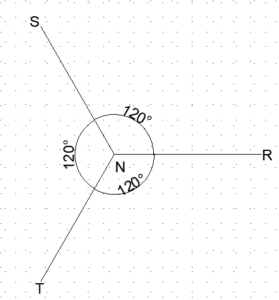
Gambar 1. Fase R, S, dan T pada sistem 3 fase.
Figure 1. R, S, and T phases in 3-phase systems.
Apa Perbedaan Tegangan Saluran dan Tegangan Fase?
Tegangan saluran merupakan tegangan yang terukur antar fase dalam sistem tiga fase. Tegangan ini sering kita sebut sebagai tegangan fase ke fase. Contoh tegangan saluran yaitu:
- Tegangan antara fase R ke fase S,
- Tegangan antara fase S ke fase T,
- Tegangan antara fase R ke fase T,
Tegangan fase merupakan tegangan yang terukur antara fase dengan netral. Tegangan ini sering kita sebut sebagai tegangan fase ke netral. Contoh tegangan fase yaitu:
- Tegangan antara fase R dengan netral,
- Tegangan antara fase S dengan netral,
- Tegangan antara fase T dengan netral,
Pada sistem tiga fase, nilai tegangan saluran besarnya 1.732 kali dari nilai tegangan fase.
Mengapa begitu? Mari kita bahas!
What is the Difference Between Line Voltage and Phase Voltage?
Line voltage is the voltage measured between phases in a three-phase system. We often refer to this voltage as phase-to-phase voltage. Examples of line voltages are:
- The voltage between the R phase and S phase,
- The voltage between the S phase and T phase,
- The voltage between the R phase and T phase,
Phase voltage is the voltage measured between the phase and neutral. This is often referred to as phase-neutral voltage. Examples of phase voltages are:
- The voltage between the R phase and neutral,
- The voltage between the S phase and neutral,
- The voltage between the T phase and neutral,
In three-phase systems, the line voltage is 1.732 times higher than the phase voltage.
Why? Let’s discuss it!
Mengapa Tegangan Saluran Lebih Besar 1,732 kali Dibandingkan Tegangan Fase?
Jika titik R, S dan T digambar secara tegak lurus, maka akan terbentuk segitiga sama sisi RST dengan sisi RS=ST=RT. Ketiga titik tersebut juga membentuk segitiga sama kaki dengan pusat atau titik N (netral), segitiga RNS, SNT dan RNT, yang ditunjukkan di bawah ini.
Why is the line voltage 1,732 times greater than the phase voltage?
If points R, S and T are drawn perpendicularly, an equilateral triangle RST with sides RS=ST=RT is formed. The three points also form isosceles triangles with centre or point N (neutral), triangles RNS, SNT and RNT, shown below.
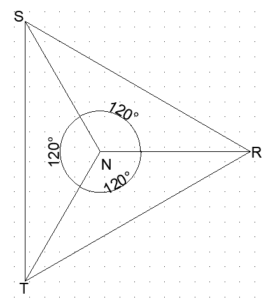
Gambar 2. Segitiga yang menggambarkan fase R, S, T dan N (titik netral).
Figure 2. A triangle representing the R, S, T and N (neutral point) phases.
Kemudian kita potong segitiga RST menjadi segitiga RNS (segitiga sama kaki) dengan panjang RS = ST = TR = y. Seperti yang telah kami jelaskan, setiap fase memiliki sudut yang berbeda yaitu 120°, sehingga ∠RNS memiliki sudut 120°. Segitiga RNS adalah segitiga sama kaki dan besarnya ∠NRS = ∠NSR = 0,5 x (180°-120°) = ∠30°. Kemudian, tarik garis tegak lurus dari titik N ke garis RS, sehingga segitiga RNS terlihat seperti berikut:
Then we cut triangle RST into triangle RNS (isosceles triangle) with length RS = ST = TR = y. As previously explained, each phase has a different angle of 120°, so ∠RNS has an angle of 120°. Triangle RNS is an isosceles triangle and the magnitude of ∠NRS = ∠NSR = 0.5 x (180°-120°) = ∠30°. Then draw a perpendicular line from point N to line RS, so triangle RNS looks like this:
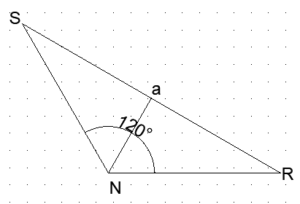
Gambar 3. Segitiga RNS.
Figure 3. The RNS Triangle.
Segitiga RNS di atas, memiliki sudut sebagai berikut.
- ∠NaR = 90°,
- ∠aNR = 0.5 x ∠RNS = 60°,
- ∠aRN = 180° – ∠NaR – ∠aNR = 30°
Apabila panjang aR adalah 0.5 x panjang RS, panjang aR adalah 0.5y. Panjang RN adalah panjang aR dibagi cos ∠aRN, sehingga panjang RN sebagai berikut:
The RNS triangle has the following angles.
- ∠NaR = 90°,
- ∠aNR = 0.5 x ∠RNS = 60°,
- ∠aRN = 180° – ∠NaR – ∠aNR = 30°
If the length of aR is 0.5 x the length of RS, the length of aR is 0.5y. The length of RN is the length of aR divided by cos ∠aRN, so the length of RN is as follows:

Nilai y merupakan nilai tegangan saluran (tegangan antar fase yang biasanya disimbolkan dengan VLL), dan nilai LRN merupakan nilai tegangan fase (tegangan fase ke netral biasanya disimbolkan dengan VLN), maka hubungan nilai tegangan saluran dan tegangan fase berdasarkan penjelasan segitiga di atas adalah sebagai berikut:
y is the line voltage value (voltage between phases or VLL), and LRN is the phase voltage value (phase to neutral voltage or VLN). The relationship between the line voltage and the phase voltage based on the explanation of the triangle above is as follows:
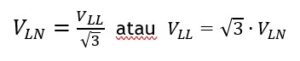
Berdasarkan persamaan diatas, didapatkan nilai tegangan saluran (VLL) ≈ 1.732 kali lebih besar dari tegangan fase (VLN).
Based on the above equation, the line voltage value (VLL) is 1.732 times greater than the phase voltage (VLN).